
1st. Edition Dungeons & Dragons

MENU
HomeFull Menu
Advanced Dungeons & Dragons
TorgananathuNebaKanezNethrial Nethrial NPCsWorld of Darkness
Las Vegas by NightEverQuest
EverQuest Resourses
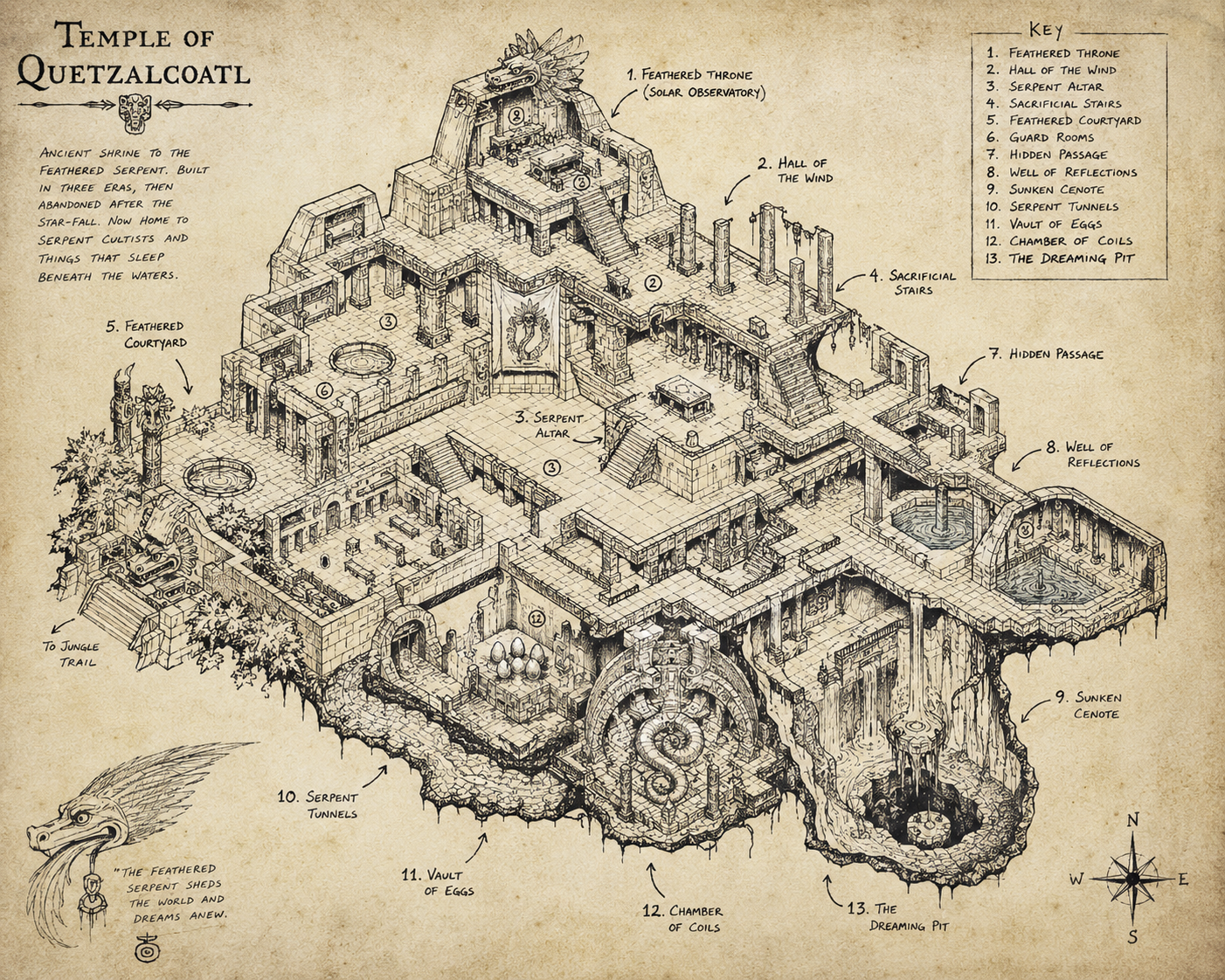
Deep within the steaming rain forests of Myrithbenzal rises the Temple of Quetzalcoatl, an ancient pyramid swallowed by vines, waterfalls, and volcanic mist. Hidden beneath layers of jungle growth and broken stone, the temple towers above the canopy like the spine of some sleeping god. Travelers who glimpse it for the first time often stop speaking entirely. The structure does not feel abandoned. It feels patient.
The people of the nearby villages believe the temple existed long before the first clans settled the jungle basin. Ancient carvings found across the region speak of a feathered serpent spirit that once brought wisdom, balance, and sacred knowledge to the people of Myrithbenzal. According to the oldest stories, the temple was built as both a sanctuary and a prison. Some claim it honored the serpent god. Others insist it was designed to contain something beneath it.
The temple rises from the center of a flooded jungle basin surrounded by cliffs and cascading waterfalls. Thick fog drifts constantly across the swamp water below the pyramid, while long stone causeways stretch outward through shallow pools filled with reeds and moss-covered statues. Broken serpent monuments lean into the water, their carved faces cracked by centuries of heat, rain, and jungle growth.
Massive stairways climb toward the upper sanctuary, but many are split apart by giant roots pushing through the stone. Obsidian braziers burn with unnatural green fire near the entrance platforms, casting eerie light across the carved walls. Feather banners hang from ruined arches high above the basin, swaying slowly in the warm jungle wind. Even during daylight, the area feels dim beneath the heavy canopy and volcanic haze.
The temple is never truly silent. Water drips constantly from the ceilings and stairways. Jungle insects buzz through the corridors. Distant drums sometimes echo through the ruins late at night, though no villagers willingly approach the temple after dark. Many claim the sounds come from deep below the pyramid itself.
The outer temple serves as the first layer of the structure and is where most explorers vanish. These upper chambers once housed guards, workers, priests, and pilgrims who traveled from distant jungle settlements. Flooded prayer halls now sit partially underwater, while crumbling barracks collapse beneath hanging vines and moss-covered beams.
Many dangers still roam these chambers. Temple Bugs nest in cracks along the walls and swarm intruders in thick waves. Poison frogs hide near stagnant pools. Jungle snakes coil around broken pillars and beneath collapsed staircases. Small groups of treasure hunters sometimes camp near the entrance halls, hoping to escape with jade relics or obsidian weapons before the deeper horrors find them.
The outer halls are filled with traps left behind by the ancient priests. Poison dart walls still function after centuries. Rotting rope bridges collapse over deep flooded pits. Hidden pressure plates release falling stone blocks from the ceilings above narrow corridors. Every chamber feels unstable, as though the temple itself resents intrusion.
Beneath the upper ruins lie the Serpent Chambers, deeper halls carved directly into volcanic stone beneath the pyramid. These chambers feel older and more sacred than the levels above. Massive serpent carvings wrap around the walls and pillars, their scales painted with faded green and gold pigment. Underground rivers flow quietly through narrow channels beneath stone bridges while volcanic steam rises from hidden vents in the floors.
The deeper explorers travel, the stranger the temple becomes. Some chambers are lined with preserved jade masks staring silently from the darkness. Others contain ritual ball courts where ancient games were once tied to sacrifice and spiritual judgment. The priests believed the movement of the ball represented the movement of the sun and stars above the jungle canopy.
One of the most feared locations within the temple is the Chamber of Feathers. This enormous circular hall is covered floor to ceiling in preserved feather mosaics depicting Quetzalcoatl descending from the heavens. Green torchlight flickers across the walls, causing the feather patterns to seem alive in the darkness. Some explorers report hearing whispering voices while standing within the chamber. Others claim touching the mosaics releases strange spores that cause vivid hallucinations and visions of ancient rituals.
Far below the sacred chambers rests the Heart Below, the volcanic under-temple hidden beneath layers of obsidian and lava rock. The air becomes hot, heavy, and difficult to breathe. Massive cracks split the floors open, revealing rivers of glowing lava flowing beneath ancient bridges. Giant serpent skeletons lie scattered across cavern floors beside sacrificial altars blackened by smoke and ash.
This lower sanctuary feels spiritually wrong. The walls pulse with heat, and shadows seem to move against the flickering green flames. The priests who once served here believed they could speak directly with the feathered serpent god through blood rituals and volcanic fire. Whatever power they awakened was never fully sealed away.
At the center of the under-temple lies the final sanctuary, where many believe the spirit of Quetzalcoatl still dreams beneath the volcanic stone. Some explorers speak of a Feathered Serpent Avatar coiled around the chamber itself. Others tell stories of a corrupted high priest twisted by centuries of isolation and forbidden rituals.
Few who enter the Heart Below ever return unchanged.
The Temple of Quetzalcoatl is more than a dungeon buried in the jungle. It is a scar upon the land of Myrithbenzal, a place where ancient wisdom, forgotten gods, and volcanic darkness remain trapped together beneath layers of stone and roots. Every corridor feels watched. Every chamber holds echoes of rituals long abandoned. And somewhere beneath the dripping halls and serpent carvings, something ancient still waits in the dark.

